Brain-Machine Technology
TianRong is driven by cutting-edge research and technological innovation, powered by a scientists team with elite academic backgrounds—over 70% of whom hold degrees from top-tier global institutions such as Harvard University, MIT, Tsinghua University, and Peking University. The company holds more than 300 core patents in the field of brain-computer interfaces. TianRong is driven by cutting-edge research and technological innovation, powered by a scientists team with elite academic backgrounds—over 70% of whom hold degrees from top-tier global institutions such as Harvard University, MIT, Tsinghua University, and Peking University. The company holds more than 200 core patents in the field of brain-computer interfaces. Building on this breakthrough, TianRong has established a complete technology chain covering EEG/neural signal acquisition, analysis, and real-time feedback. These advancements have enabled the translation of BCI technology from laboratory prototypes to scalable industrial applications, with mature solutions now deployed across four key sectors: Rehabilitation, Healthcare, Human–Computer Interaction, and Embodied Intelligence.
Research Collaboration
Information about a person's engagement and attention might be a valuable asset in many settings including work situations, driving, and learning environments. To this end, we propose the first prototype of a device called AttentivU—a system that uses a wearable system which consists of two main components. Component 1 is represented by an EEG headband used to measure the engagement of a person in real-time. Component 2 is a scarf, which provides subtle, haptic feedback (vibrations) in real-time when the drop in engagement is detected. We tested AttentivU in two separate studies with 48 adults. The participants were engaged in a learning scenario of either watching three video lectures on different subjects or participating in a set of three face-to-face lectures with a professor. There were three conditions administrated during both ...
An EEG-Based Closed-Loop Biofeedback System for Real-Time Monitoring and Improvement of Engagement for Personalized Learning

Neurofeedback games are an effective and playful approach to enhance certain social and attentional capabilities in children with autism, which are promising to become widely accessible along with the commercialization of mobile EEG modules. However, little industry-based experiences are shared, regarding how to better design neurofeedback games to fine-tune their playability and user experiences for autistic children. In this paper, we review the experiences we gained from industry practice, in which a series of mobile EEG neurofeedback games have been developed for preschool autistic children. We briefly describe our design and development in a one-year collaboration with a special education center involving a group of stakeholders: children with autism and their caregivers and parents. We then summarize four concrete implications we ...
Designing Mobile EEG Neurofeedback Games for Children with Autism: Implications from Industry Practice
Radiofrequency catheter ablation (RFCA) for patients with atrial fibrillation (AF) can generate considerable physical and psychological discomfort under conscious sedation. App-based mindfulness meditation combined with an electroencephalography (EEG)-based brain-computer interface (BCI) shows promise as effective and accessible adjuncts in medical practice. This study aimed to investigate the effectiveness of a BCI-based mindfulness meditation app in improving the experience of patients with AF during RFCA.
Effectiveness of a Mindfulness Meditation App Based on an Electroencephalography-Based Brain-Computer Interface in Radiofrequency Catheter Ablation for Patients With Atrial Fibrillation: Pilot Randomized Controlled Trial
Behavioral interventions have been shown to ameliorate the electroencephalogram (EEG) dynamics underlying the behavioral symptoms of autism spectrum disorder (ASD), while studies have also demonstrated that mirror neuron mu rhythm-based EEG neurofeedback training improves the behavioral functioning of individuals with ASD. This study aimed to test the effects of a wearable mu rhythm neurofeedback training system based on machine learning algorithms for children with autism.
Wearable EEG Neurofeedback Based-on Machine Learning Algorithms for Children with Autism: A Randomized, Placebo-controlled Study
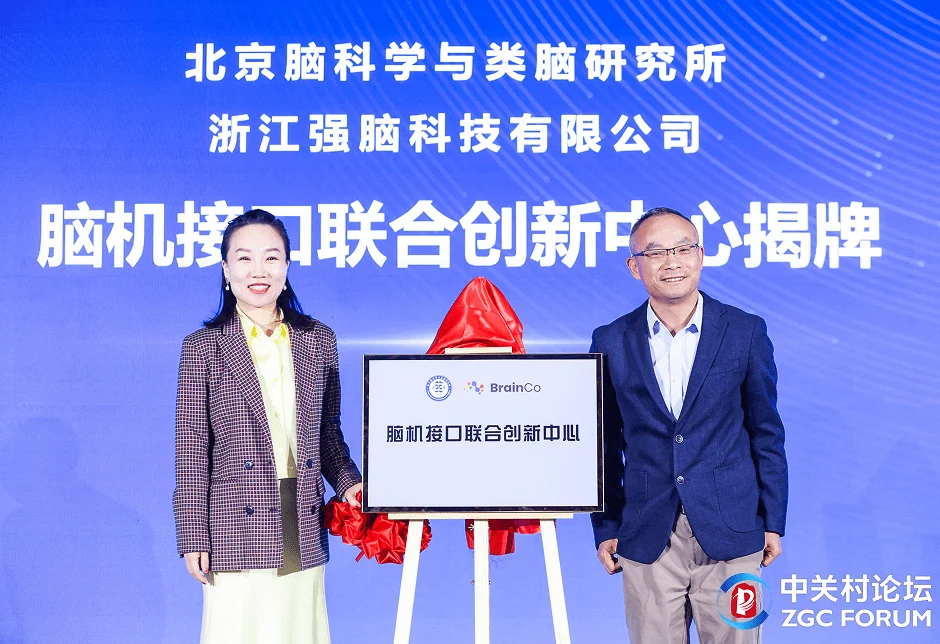
TianRong and Beijing Brain Research Institute Jointly Establish BCI Joint Innovation Center
At the Brain-Computer Interface Innovation Development and Application Forum of the Zhongguancun Forum, TianRong and the Beijing Brain Research Institute announced the launch of the "Brain-Computer Interface Joint Innovation Center" and signed a strategic cooperation agreement. The collaboration will accelerate research, innovation, and industrial application in the BCI sector and deepen integration between academia and industry.
Learn More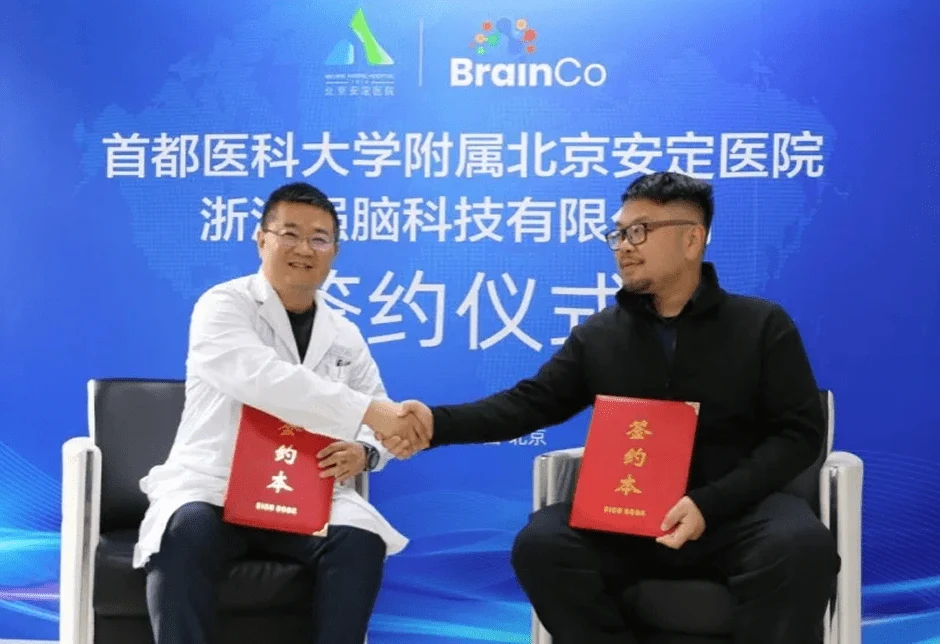
TianRong Signs Deep Cooperation Agreement with Beijing Anding Hospital
Beijing Anding Hospital, affiliated with Capital Medical University and TianRong, signed a deep cooperation agreement. The two parties will focus on depression screening as their primary research direction, integrating advanced BCI and AI technologies to explore the scientific and clinical value of multimodal indicators for brain and mental disorders. They will work together to develop brain-network solutions for mental illnesses based on multi-channel EEG data and jointly promote the clinical validation, application, and dissemination of these results.
Learn More
TianRong Co-builds the Provincial Key Laboratory for Brain–Machine Collaborative Intelligence Technology and Applications with Hangzhou Dianzi University and Provincial Tongde Hospital
Addressing the strategic needs of both the nation and Zhejiang Province to shift from an international follower to a global leader in brain–machine intelligence, the laboratory focuses on applied basic research in non-invasive BCI technologies. Its work covers new paradigms of non-invasive BCI, BCI security, low-SNR information decoding, brain-inspired intelligence, and theories and key technologies for brain–machine collaborative enhancement. The laboratory aims to generate original scientific achievements with independent intellectual property rights and to cultivate high-end interdisciplinary talent in brain–machine intelligence.
Learn MoreHistory of Brain Science Development
2025
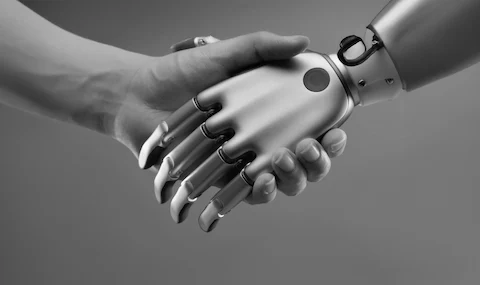
Throughout the year, TianRong maintained strong societal visibility and demonstrated consistent growth, fueled by accelerated technological innovation and industrial scaling. The company's sustained commitment to disability inclusion was recognized with the “National Advanced Collective for Work with Persons with Disabilities” award at the 7th National Commendation Conference. Key annual milestones included the launch of a new generation of bionic dexterous hands for embodied intelligence applications, which have been deployed in advanced sectors like intelligent manufacturing. Furthermore, TianRong established a Brain-Computer Interface Joint Innovation Center in partnership with the Beijing Institute of Brain Science, a collaboration designed to propel research, technological breakthroughs, and industrial adoption within the BCI field.
- ①1929 First EEG recording and publication — Hans Berger. Über das Elektrenkephalogramm des Menschen. Max Planck Institute, 1929.
- ②1969 Invasive BCI used in primates — Fetz, E. E. (1969). Operant conditioning of cortical unit activity. Science, 163(3870), 955–958.
- ③1978-1979 "Dobelle Eye" vision restoration experiment — Dobelle, W. H. et al. (1979). Artificial vision for the blind by electrical stimulation of the visual cortex. Neurosurgery, 5(4), 521–527.
- ④1988 Non-invasive brain-controlled robot — Bozinovski, S., Sestakov, M., & Bozinovska, L. (1988). Using EEG Alpha Rhythm for Robot Control. IEEE.
- ⑤1998 Paralyzed patient controls cursor — Kennedy, P. R., Bakay, R. A., Moore, M. M., Adams, K., & Goldwaithe, J. (1998). Restoration of neural output from a paralyzed patient by a direct brain connection. NeuroReport, 9(8), 1707–1711.
- ⑥2006 Spinal cord injury patient controls cursor — Hochberg, L. R. et al. (2006). Neuronal ensemble control of prosthetic devices by a human with tetraplegia. Nature, 442(7099), 164–171.
- ⑦2014 Paralyzed patient kicks off World Cup with brain-controlled exoskeleton — Duke University News (2014). Walk Again Project demonstration at FIFA World Cup Opening Ceremony.
- ⑧2014 First non-invasive brain-to-brain interface experiment — Rao, R. P. N. et al. (2014). A Direct Brain-to-Brain Interface in Humans. PLOS ONE, 9(11): e111332.